About Lewis Jackson Founder of Project Reform 360
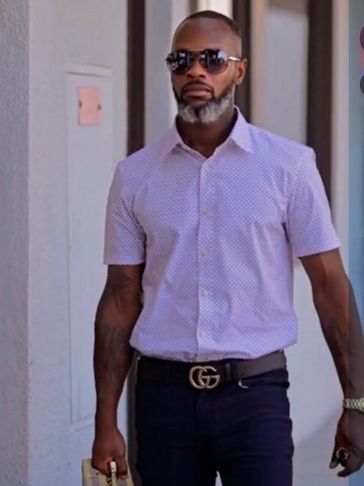
My Story
I was born on September 30, 1976, to Sandra and Lewis Jackson, and raised in New Wellington, South Carolina. Poverty, alcoholism, and addiction were prominent throughout my childhood. Mental health was taboo no one talked about it, no one named it, and no one addressed the barriers it created in our community. Looking back now, I can clea
I was born on September 30, 1976, to Sandra and Lewis Jackson, and raised in New Wellington, South Carolina. Poverty, alcoholism, and addiction were prominent throughout my childhood. Mental health was taboo no one talked about it, no one named it, and no one addressed the barriers it created in our community. Looking back now, I can clearly see how prevalent mental health challenges were, even though they went unspoken.
Family was central to my upbringing. We were tightknit, and because of that, I didn’t really have friends because they all were family. We all grew up together in the same community. Many of the individuals I admired and looked up to were involved in drug use and the drug trade. At the time, I didn’t understand why that life seemed so appealing. I now recognize that it was rooted in love, loyalty, and connection. The way society often views drug dealers and addicts was not my experience. These individuals loved me, and I never doubted that. Out of loyalty and admiration, I wanted to be like them—and at a young age, I began walking that path.
From kindergarten through fourth grade, I was a good kid. Everything began to change in fifth grade, when I started comparing myself to others, evaluating who I was, and deciding who I wanted to become. From that point through my graduation from Silver Bluff High School, my life spiraled into constant trouble—fights, drugs, guns, sneaking out, and promiscuity. Eventually, I believed I had picked up a drug charge and went on the run from the police.
I remembered friends talking about the United States Marine Corps as a way out—a chance to leave the community, travel, and do something meaningful with their lives. For me, it was an escape. I enlisted in the Marine Corps and served during Desert Shield and Desert Storm. During my service, I was injured and later medically separated with an honorable discharge.
At the young age of 20 and 21, I became a father to two beautiful girls. When I was incarcerated, they were just two and three years old. By the time I was released, they were ten and eleven. I did not understand at the time the impact my choices would have on their lives. My absence caused them great grief, harm, trust issues, and the profound struggle of growing up without a father. This reality is something I carry with me every day, and it has shaped my commitment to being present in my children’s lives now.
After leaving the military, I returned to the very environment I had tried to escape. I became the person I once swore I wouldn’t become. Eventually, I stood before a judge and was sentenced to ten years in prison under South Carolina’s 85% guideline. I served eight years and six months. I turned 21, 22, 23, 24, 25, 26, 27, 28, 29, 30, and 31 years old behind prison walls.
While incarcerated, goals, dreams, and ambitions began to take shape. I left prison determined to build a better life—but my criminal record followed me everywhere. Employment was difficult to secure, but eventually I earned my barber license, found work, got married, and became a father to a daughter. Later, I moved my family to Cincinnati, Ohio.
Unfortunately, while in Ohio, I reverted back to my old life. That regression cost me my marriage and my family. I left Ohio and came to California, chasing what I believed was the American Dream. I was sure I would make it. I was sure I would succeed. Instead, I found myself sleeping in my vehicle, ultimately experiencing homelessness.
At rock bottom, I realized something important—I still had support. I still had goals. I still had dreams. I was able to tap into every faculty within me and begin again. Step by step, I pulled myself up by my bootstraps and reclaimed my life.
Since that time, my professional and personal journey has grown in ways I never imagined. I transitioned from a Case Manager role into becoming a Peer Support Specialist, where my lived experience—combined with professional training through Loyola Marymount University—helped open doors I once believed were out of reach. I began my work as a Case Manager with Hope the Mission and later became a Peer Support Specialist within the mental health department. From there, I joined Healthcare in Action (HIA). Encouraged and inspired by the staff at Hope the Mission, I took a leap of faith and became a Peer Navigator on a street medicine team with HIA.
Through this role, I gained deeper insight into the business and operational side of organizations serving the unhoused community. While I recognized the importance of structure, funding, and compliance, I also became aware of the limitations created by billing requirements and system expectations. This realization pushed me to think beyond those boundaries and ultimately led me to establish my own nonprofit organization, Project Reform 360—where there are no limitations on providing the services people living on the streets truly need.
Alongside my professional growth, my personal life has also evolved significantly. I am the primary caregiver for my deaf son, who now has cochlear implants that are helping him hear and understand the world in new ways. We recently moved from Canoga Park to Hollywood, and he actively joins me in community outreach—helping distribute hygiene kits and engaging with the unhoused community by my side.